
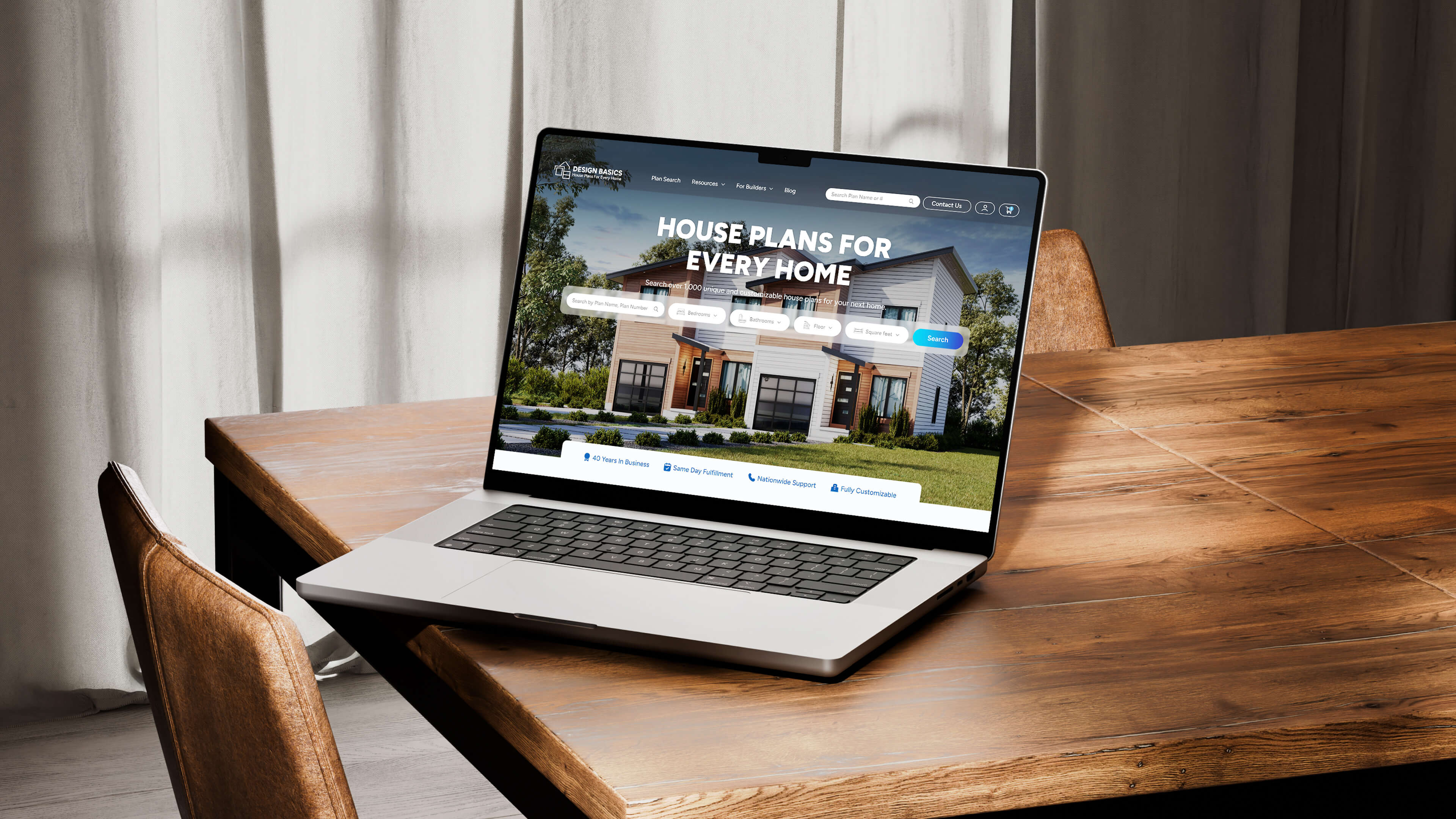
The catalog represented three decades of architectural intellectual property: more than 3,000 plans, each with its own variations, renderings and licensing terms. None of it had been modeled for digital commerce.
Every plan attribute, including square footage, bedrooms, bathrooms, stories, garage bays and lot width, had to be normalized into structured, queryable data. Variations and renderings had to be mapped to their parent plans. And licensing, historically handled through B2B relationships, had to become an automated transaction executed the moment a customer completed checkout.

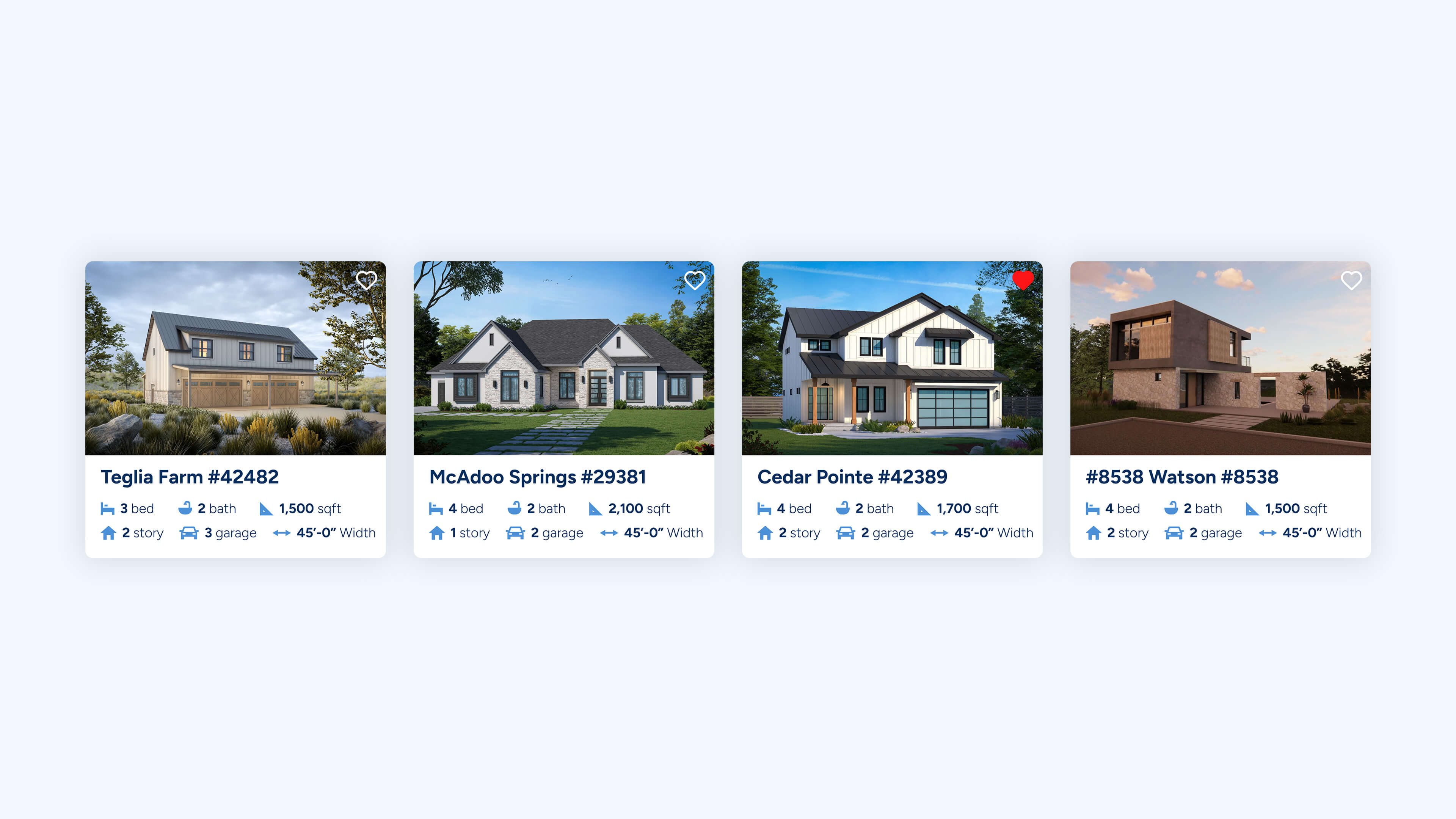
Data architecture. WMG® designed the information model and database schema for the entire catalog, defining plans, variations, renderings, specifications and license types as related entities. The structure powers faceted search and filtering across every attribute and scales seamlessly as new plans are introduced.
Software. On that foundation, our engineering team built custom catalog management and transaction software that governs pricing, licensing options and real time license fulfillment at the point of sale.
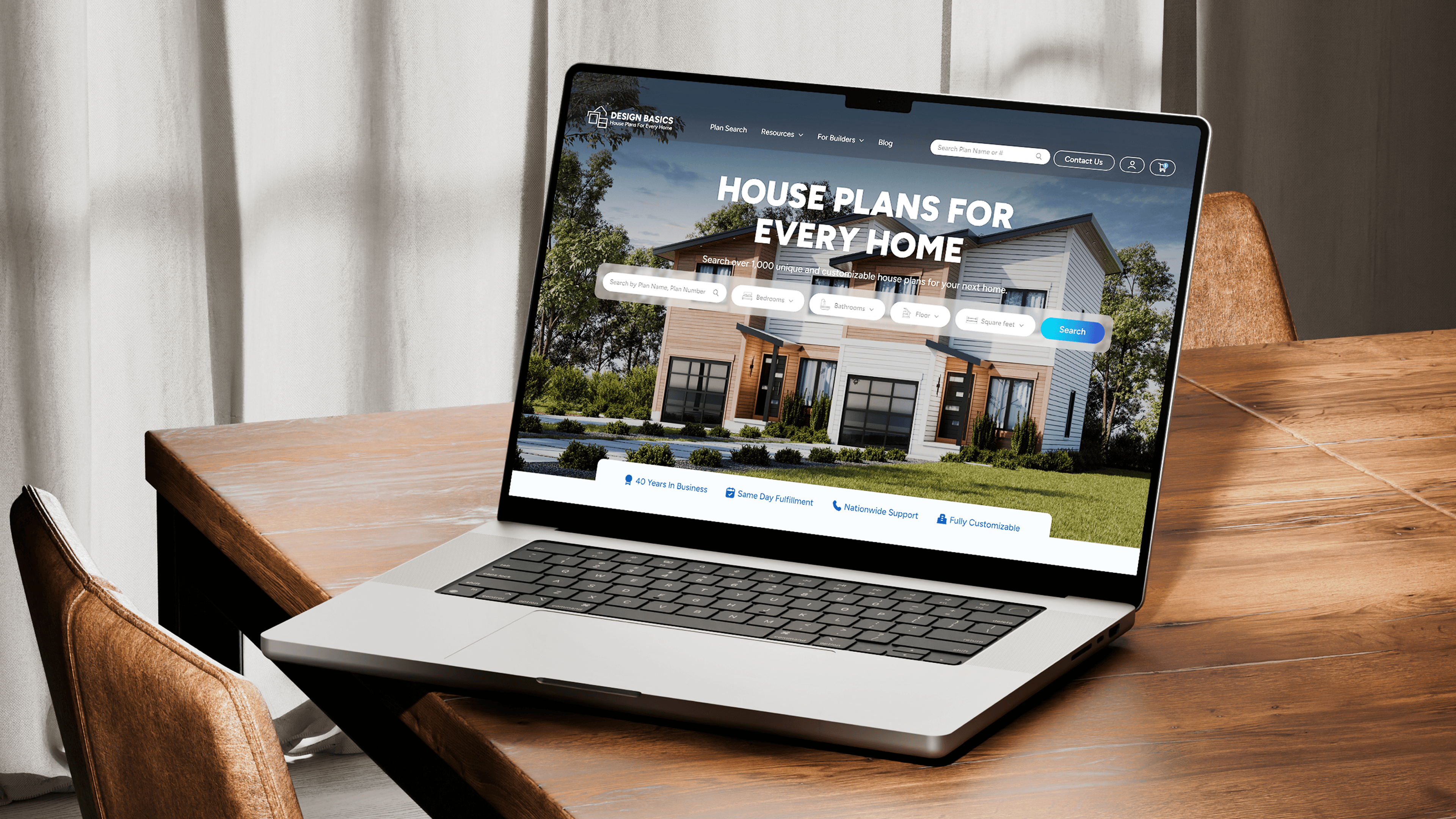
Interface. WMG® created a dedicated design library for Design Basics, a reusable system of components and interaction patterns, and used it to design and develop the complete web application. Every screen, from discovery and search to plan detail, configuration and checkout, is fully responsive and assembled from the same components, ensuring the product remains consistent as it grows.
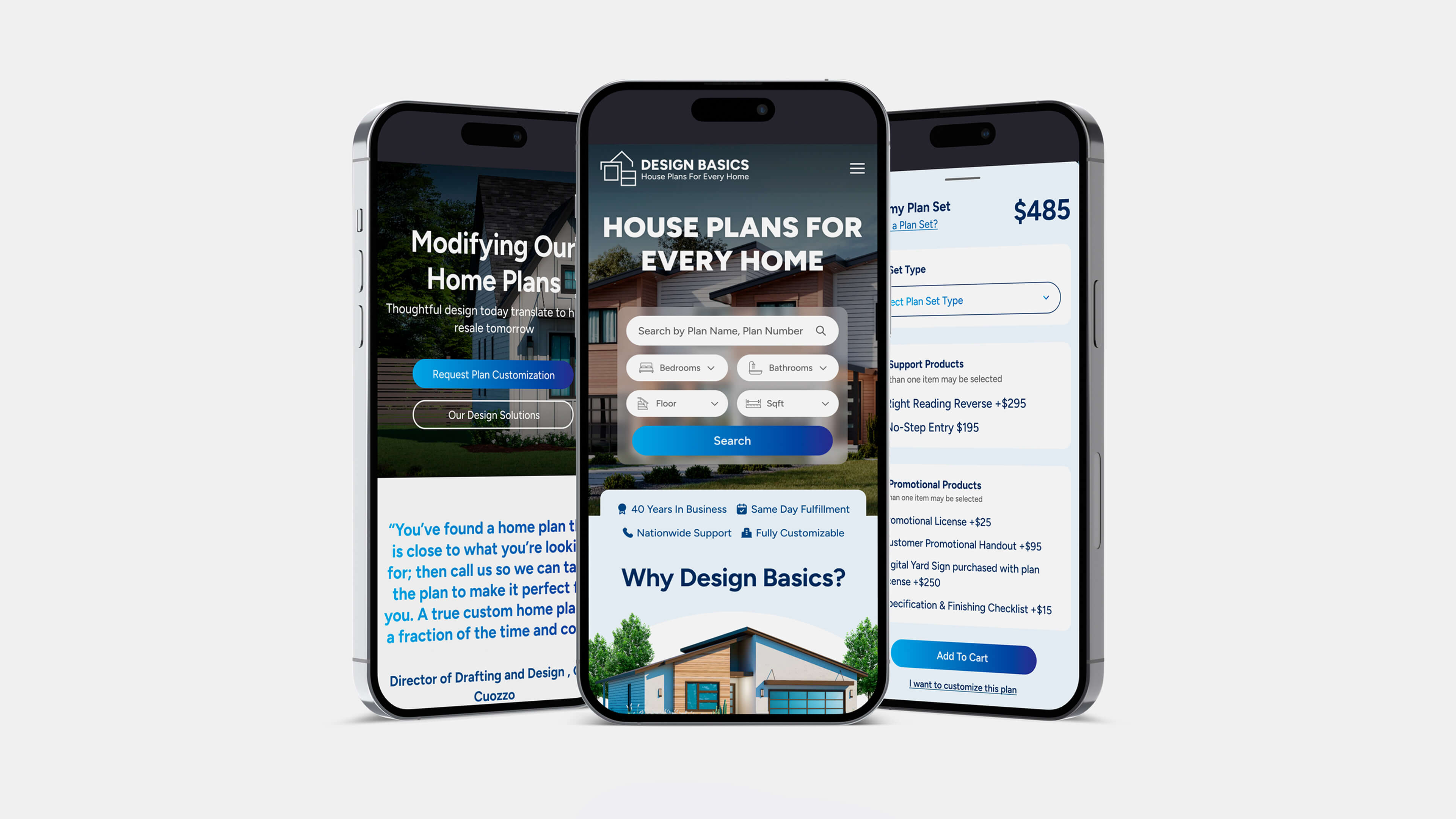
Design Basics now operates a production ecommerce platform that sells and licenses more than 3,000 architectural plans online, in real time. A business built over 30 years on B2B relationships now sells direct to consumer, on infrastructure WMG® designed and built.
Because the data model, software and interface were engineered as a single system, the platform is extensible by design. New plans, product types, licensing models and sales channels integrate into the existing architecture without the cost of a rebuild.